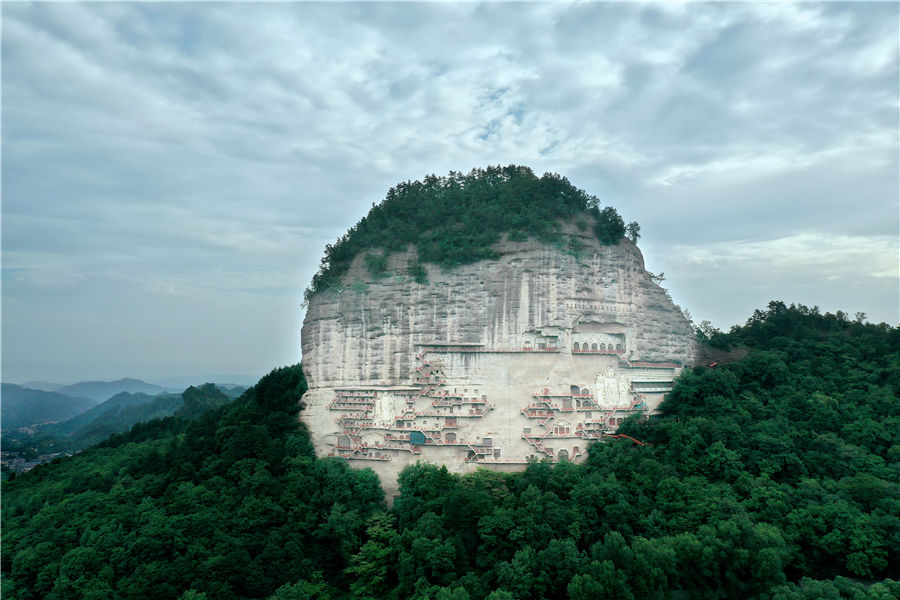
Maijishan Grottoes
Overview
The Maijishan Grottoes, located in Tianshui city, Gansu province, China, are a remarkable example of ancient Buddhist cave art and one of the most important cultural heritage sites in China. First carved in the 4th century, these grottoes are renowned for their vividly portrayed, smiling earthen statues, which encapsulate a blend of human and divine aesthetics. The Maijishan Grottoes are part of a network of Buddhist art sites that include the Mogao Caves, Yungang Grottoes, and Longmen Grottoes, reflecting the rich cultural tapestry of ancient China.
Historical Significance
The grottoes were initially developed during the turbulent period of the Sixteen Kingdoms (304-439 AD), a time marked by warfare and political fragmentation in China. Despite the chaos, Buddhism emerged as a unifying spiritual force, and the ruling elites often patronized the construction of Buddhist sites to legitimize their power and bring social harmony. The Maijishan Grottoes are emblematic of this era, offering insights into the religious, political, and artistic milieus of ancient China.
Artistic Features
The Maijishan Grottoes are best known for their intricate statues and exquisite murals. The statues, primarily made from clay, depict a variety of Buddhist figures, including Bodhisattvas, disciples, and celestial beings. The artistry of these figures is distinguished by their lively expressions and dynamic postures, which vividly convey both human and divine emotions. The murals, though less extensive than those found in some other grotto complexes, complement the statues by depicting Buddhist narratives and iconography.
Cultural Context
Situated along the ancient Silk Road, the Maijishan Grottoes were part of a broader network of cultural exchange. This location facilitated the influx of diverse artistic styles and religious ideas from Central and South Asia, contributing to a distinctive aesthetic that blends indigenous Chinese elements with foreign influences. As such, the Maijishan Grottoes not only served as religious sites but also as cultural melting pots that reflected the dynamic exchanges of the Silk Road era.
Conservation and Challenges
Preserving the Maijishan Grottoes presents significant challenges due to environmental and biological factors. The site's exposure to natural elements such as rain and humidity has led to periodic microbial outbreaks that threaten the integrity of the murals and statues. Conservation efforts have focused on addressing these issues through the application of biocides, environmental monitoring, and structural reinforcements. The ongoing collaboration between local and international scholars aims to develop sustainable conservation strategies to protect this invaluable heritage site for future generations.
Modern Relevance and Tourism
Today, the Maijishan Grottoes continue to captivate visitors with their historical and artistic charm. As a major tourist attraction, the grottoes offer a window into the spiritual and cultural history of ancient China. Efforts to enhance visitor experiences through digital technologies and interpretive programs are ongoing, ensuring that the site remains accessible and engaging for a global audience. The Maijishan Grottoes stand as a testament to the enduring legacy of Buddhist art and its profound impact on Chinese civilization. Article reference1. Crossroads of cultures. chinadaily.com.cn. 20182. Get an immersive experience of Grotto art at Beijing exhibition. chinaservicesinfo.com. 2023Photo Gallery(6 pictures)CategoriesCultural HeritageTagChinese SculptureWorld Heritage in ChinaWorld HeritageRelatedYungang Grottoes, DatongKizil CavesChinese Grotto ArtGames & QuizzesGrotto Greats: How well do you know China's cave art?Catalogue1. Overview2. Historical Significance3. Artistic Features4. Cultural Context5. Conservation and Challenges6. Modern Relevance and Tourism- - - []








